Showing posts with label plastic containers manufacturer. Show all posts

How to Recycle Medicine Bottles

How to Recycle Medicine Bottles

Limited resin code acceptance and reuse options plague medicine bottle recycling, yet your community may still have a convenient recycling option in place.

Every year an estimated 10 billion prescriptions and buy even more over-the-counter medications. Prescriptions are commonly packaged in orange plastic bottles. Over-the-counter medications have a wider variety of bottle types, including clear, opaque and coloured plastic. The problem with recycling prescription medicine bottles is that most curbside programs do not accept them. The tough thing about reusing them is that they should not hold food products, lest leftover medication makes its way into food. 

Add that to the difficulty of disposing of leftover painkillers, antibiotics, sleep medication and antidepressants, and finding a way to deal with medicine bottles in an eco-friendly manner can seem like a lost cause. But do not give up hope quite yet. It can be fairly easy to recycle non-prescription medicine bottles depending on their composition and the rules at your local recycling company. And, as the issues involved with disposing of old medications become more prominent, new solutions for recycling these products are becoming available.

What are medicine bottles made of?
The orange bottles that hold prescription medication are typically made of polypropylene, also known as PP or by the resin code #5. Polypropylene is the plastic of choice for many food manufacturers and can also be used to make fabric and household products like carpeting and roof membranes. Light can damage medication, which is why the bottles are tinted. Bottles that hold over-the-counter medication are most commonly made of #1 (polyethylene terephthalate, or PET or PETE), #2 (high-density polyethylene, or HDPE) and #5 plastics. White opaque bottles are typically #1 or #2 plastic, while clear or coloured bottles are more likely to be #5 plastic.

Why is it important to recycle medicine bottles — and medicine?
Medicine bottles are made of plastic, which will not biodegrade. Imagine billions of those bottles creating a permanent sea of translucent orange plastic in landfills across the country, and you can imagine why it is important to find another use for them. Just as important is finding a good way to dispose of the medicine contained in those bottles. 

The answer is not to flush them down the toilet. Even the best sewage treatment plants will not remove prescription medications from the water before it is discharged into rivers and streams. Drugs can affect fish and other wildlife, and they will eventually make their way back into human consumption. Hanging onto drugs indefinitely is not a good solution either. Old medications may not work properly after their expiration date, and some in the house may find those drugs awfully tempting. A 2012 survey showed that 24% of teenagers admitted that they had taken prescription medications that were not prescribed to them.

How to recycle medicine bottles
Many curbside recycling programs that accept #1 and #2 plastic will take medicine bottles made with that material. However, some limit #1 and #2 plastic collection to tubs and bottles of a certain size and shape. Check with your recycler to find out their policies on plastic collection. Municipalities that accept #5 plastic are fewer and farther between.  A better option is to see if your local recycling centre accepts #5 plastic. All the recycling centres in Iowa City, IA, take #5 plastic. So does the Shoreway Recycling Center in San Carlos, CA (it will even pay for used plastics, although the amount is pretty small).

Use 1-800-Recycling's recycling location search tool to find a #5 plastic recycler in your community. You can also recycle #5 plastic through a service called Gimme 5. The program is run by Preserve, which makes consumer products from recycled plastic. Whole Foods Market is a major partner in the Gimme 5 initiative and has #5 plastic collection bins in many of its stores. If you do not live near a Whole Foods, you can mail all your #5 plastic to Preserve using the address on their website. There is no charge to recycle these plastics other than the cost of shipping.

How to safely dispose of medication
Government agencies and industry groups are making big strides toward dealing with the problem of prescription medication disposal. The federal Drug Enforcement Administration has started National Prescription Drug Take-Back Days designed to gather and properly dispose of unwanted medications. Working with local law enforcement agencies, each state sets up several sites where people can drop off pills. Take Back Days typically happen once or twice a year. 

Some cities and counties have permanent collection locations for unwanted prescription medications. In Eugene, OR, for example, people can drop medications in special collection boxes located inside government buildings. Medications cannot be recycled for obvious safety reasons, but they can be burned in special incinerators that keep harmful substances from entering the air.

How to reuse medicine bottles
Old medicine bottles can be reused as storage containers for items such as sewing supplies, screws, nails and small hair accessories. They also look great incorporated into light fixtures, turned into vases or used as moulds for homemade crayons

Advantages of Pharmaceuticals Plastic Bottles

PET is chemically inert, non-toxic and safe for food-contact packaging as per testing of specific and overall migration limits set for food, beverages and pharmaceutical packaging. It is to be noted that the current gazette is only a draft notification in regards to the usage of PET bottles and there is NO ban in place, as is being circulated. PET bottles, which are widely used for pharma products in many countries, are tested as per global standards. It is no wonder that bottles made from this versatile, convenient, safe and eco-friendly PET plastic are used for packaging medicines for paediatric, geriatrics and pregnant women by the world's biggest and best pharmaceutical companies. It is worth noting that some of these pharma MNC's find a place in the "Global 10" list and are known to care for the health-wellness of human beings. Thus, the news circulating against "PET for Pharma packaging" is purely based on the misinformed assessment of the facts, to say the least.

PET has today created a niche for itself in the pharma industry owing to the unique set of advantages it provides to the product packaged. It is true that PET started as a replacement for glass in the pharmaceutical industry in the early 90's; however, today it is the first material of choice for any new product or product extensions launched. In fact, there have been recent developments in special grades of PET raw material to be used even for oxygen-sensitive pharma molecules, where glass has been traditionally used.

As you might be aware, packaging of pharmaceutical products has undergone a sea change with constant evolution over the last few decades. For instance, Lami Tubes have replaced Lead Tubes and Polymeric Blister Packs have replaced Metallic Blisters. Similarly, PET bottles have well-replaced glass bottles, at least in the packing of the majority of oral liquids.

In India, There are broadly seven types of plastics and each one of them is denoted with an individual recycling code. PET is a 100% recyclable material with the recycling code of "1" and the recycled bottles in India are used for non-bottle applications like fibre and strapping. PET is one of the most eco-friendly plastic materials available and is 100% recyclable. there are more than 1500 PET converters and around 20% of them primarily supply to the pharma sector. 

The substitution of plastics with glass as the packaging material would result in an increase of packaging cost by at least 20% and this could also result in a rise in the prices of medicines. In regard to the cancellation of government price caps on 108 expensive and widely prescribed medicines, the likely effect would vary as per the different product categories and that would decide the compounded impact on consumers. In addition, as a glass is more centralized in geographical locations, this would also lead to increase in over-all SCM costs if PET bottles are replaced by glass bottles.

  • The significantly lower weight of a bottle than in case of other materials such as glass or HDPE (weight of 1L milk PET bottle is only 25g, while the weight of 1L HDPE container is 38-40g). 
  • No material loss during production. 
  • Lower costs due to material saving and manufacturing technology (high efficiency, low power consumption, full automation of the process).
  • PET bottle offers a better barrier against oxygen and better protection from odours than HDPE.
  • The possibility of producing tailor-made bottles with original shapes, which are attractive and aesthetic for customers and create great marketing opportunities. 
  • PET bottles can be transparent or coloured in different colours including white – which reduces the effect of light. 
  • Smooth, aesthetic finish of a bottleneck, formed during preform injection – no knife cut-off trace or spikes like in an HDPE.
  • The new generation of cap closure dedicated to PET bottle that prevents contamination of the product in case of multiple uses (repeated opening and closing). 
  • PET bottle is extremely lightweight and has a high shock-resistance. It’s convenient for production and distribution. 
  • Transport in several layers is possible – up to six layers with the right bottle design. Positive environmental profile as PET bottle can be easily recycled. 
  • Like glass, PET is a biologically inert material that doesn't react with beverages or foodstuff and is resistant to attacks by micro-organisms.
For more about PET Bottles Click here

IMPORTANCE OF PLASTIC IN OUR DAILY LIFE

Plastic products Manufactures in Kerala

Plastics are a subset of materials known as Polymers. These are composed of large molecules formed by joining many smaller molecules together (monomers). Other kinds of polymers are fibres, elastomers, surface coating and biopolymers, such as cellulose, proteins and nucleic acids. Plastics owe their name to their capability to be shaped to form articles of convenient value by various conversion and forming processes. These are some atypical properties of plastics materials, which make them unique so that products can literally be tailor-made out of these materials.

Plastic products Manufactures in Kerala
In fact, plastics have encompassed every facet of human life viz. agriculture and water consumption, building construction, communication, small and bulk packaging, education, medicine, transportation, defence, consumer durables to name a few. One of the reasons for the great popularity of plastics is due to the remarkable range of properties demonstrated by them because of their ease of processing. Hence, the demand for plastics has been increasing in modern living. 

The Internet, globalisation, increased speed of communication, faster means of transportation, the advance of surgical medicine - all these would not be possible without plastics. Unremitting technological innovation by the plastics industry means that even more efficient, lightweight and compliant forms of plastics are being developed for an increasing range of uses. It is these advances that allow plastics to play an imperative role in the pursuit of sustainable development, by bringing innovative solutions to the full range of challenges facing society. Plastics have been providing help to tackle the world's water circulation crisis, with affordable, easily constructed piping providing solutions to clean water shortages for 5.5 million people in Asia, the Middle East and Africa. Also, the use of plastics drastically reduced the use of traditional usage of wood and other forest products thus resulting in the reduction of deforestation.

Plastic products Manufactures in KeralaIt is estimated that the use of plastics as a whole actually saves more oil than is needed for their manufacture. At end-of-life, plastics can be a valuable alternative energy source in their own right. Plastics recycling continues to increase in the world while energy recuperation is a responsible use of our oil resources, rerouting waste from landfill and helping to preserve fossil fuels. Tapping the sun and wind is already bringing clean and efficient energy to people worldwide and is greatly facilitated by the use of plastics that constitute major parts of the cells and turbines. Incessant improvements in the material itself and recovery technologies mean that, in the future, packaging will become even lighter and more resource-efficient. 

Plastics have proved to have a wide range of applications in a large number of fields and their applications are increasing due to the advantage of low cost, high durability and easy availability. 

Plastics are treated as versatile materials since the properties of these materials can be tailored to meet specific demands by varying molecular weight, molecular weight distribution and side chain branching. Further making copolymers and polymer blends and alloys provide on the mechanism for providing a synergism in properties and tailor making materials for specific applications.

Plastic is used to make optic fibres that are laid under the sea to provide high-speed internet connection to the users. Without the material, innovation is not possible in the field of technology. Modern air conditioners are moulded in plastic to ensure lightweight appliances that can be installed in commercial and residential premises. It also used in making snow, skateboards and modern aviation equipment.

Plastic products Manufactures in KeralaA lot has been written about the material by environmentalists, however, a majority of them is negative content highlighting the issues. Scientists opine that plastic is non-biodegradable however it can be recycled to save the environment. Technological changes are taking place to reduce the harmful effect caused by its waste on the planet. People need to view the usage of plastic in an objective manner rather than drawing the conclusion by analyzing only one side of the story. At present they have not found any replacement of the material, therefore it is important to monitor the usage.

IMPORTANT FACTORS IN PLASTIC PACKAGING

There are six primary types of plastic most commonly used in bottle manufacturing:
Polyethene terephthalate (PET or PETE) is common in food, medicine, beverage bottles and more. PET has a recycling symbol of 1 and is easy to recycle. High-density polyethene (HDPE) is extremely common in plastic bottle packaging and is used for many food, beauty, household and automotive items. HDPE has a recycling symbol of 2 and is fairly easy to recycle. Low-density polyethene (LDPE) is a flexible plastic and is durable as well. Squeezable beverage bottles and other food or household products are often made from LDPE. This plastic has as a recycling symbol of 4 and is more difficult to recycle, as not all recycling centres will accept LDPE products. Polypropylene (PP) is a strong plastic that can hold up under high temperatures. Often used for household bottles, such as food and garden products, PP is also common as well in medicine and vitamin bottles. PP has a recycling symbol of 5 and is difficult to recycle since many recycling centres will not accept PP items.Polycarbonate/polyamide (Other) is often used for industrial liquid bottles. “Other” plastic bottles are common in medical storage and other large containers and products. Items marked “Other” have a recycling symbol of 7 and are very difficult to recycle.

RE-USE OF PET BOTTLES
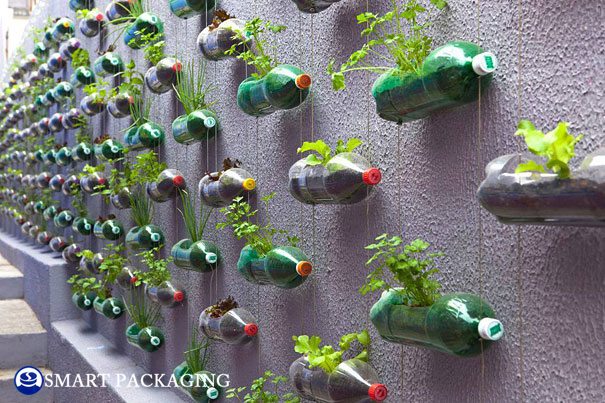
PET bottles are also recycled as-is (re-used) for various purposes, including for use in school projects, and for use in solar water disinfection in developing nations, in which empty PET bottles are filled with water and left in the sun to allow disinfection by ultraviolet radiation. PET is useful for this purpose because many other materials (including window glass) that are transparent to visible light are opaque to ultraviolet radiation.

Plastic products Manufactures in Kerala

A novel use is as a building material in third-world countries. According to online sources, the bottles, in a labour-intensive process, are filled with sand, then stacked and either mudded or cemented together to form a wall. Some of the bottles can be filled instead with air or water, to admit light into the structure.

Click Here for more about Plastic Bottle Manufacturing. 

Different Types Of Plastic Bottles And Uses

Different Types Of Plastic Bottles And Uses


Liquid Packing Bottles: Liquid packing bottles are mainly used to pack bottles or to store liquid items such as Liquid soaps, chemicals, and things like that. Smart Packaging bottles have no reaction against these kinds of items stored. Especially liquid items like acids which require high duty plastic containers.


Photo Resistant Bottles: Photo resistant bottles are specially made bottles which helps the liquid items to be stored without any problem if the bottle is exposed to the sunlight or any other types of light which may be powerful or less powerful. 

Bulk Packing Bottles:  Bulk packing bottles are mainly used for industrial purpose to store and transport items in bulk and high quantity. These packing bottles are heavy duty and strong therefore less possibility of breakage and leakage.

Hand Wash Bottles:  Hand wash bottles are for storing hand wash liquid and using. Hand wash bottles have an easy press mechanism to get liquid into the hands for washing.

Toilet cleaning Bottles:  Toilet cleaning bottles are used to store and use toilet cleaning liquids. To for the easy use these bottles have long head which is very useful for pouring the liquid into untouchable portions of the toilet.

Other types of plastic bottles that Smart Packaging is manufacturing are,
Square type bottle
square type jar
hand bottle
square type wide mouth
rib jar
photo resistant bottle
bulk packing
dish wash bottle
glass bottle cap and lids
flat container
customized products
chemical bottles
pesticide bottle
etc.


Advantages of Recycling Plastics

Advantages of Recycling Plastics

Plastics should be recycled because of a number of reasons as can be seen below:

Provision of a Sustainable Source of Raw Materials
Recycling plastics provides a sustainable source of raw materials to the manufacturing industry. Once the plastics are recycled, they are sent to manufacturing industries to be redesigned and converted into new shapes and used in different appliances.

Reduces Environmental Problems
Since plastics are non-biodegradable, they pose a high risk to the people and the environment as a whole. They can block sewer lines, drainages and other waterways leading to blockages and unwanted pileups. When plastics are eliminated through recycling, the environment looks clean and inhabitable.

Reduces Landfill Problems
Recycling plastics minimizes the amount of plastic being taken to the ever-diminishing landfill sites. Most countries have designated areas specifically meant for burying plastics. When they are recycled, these sites will receive little plastic garbage. The remaining areas can be used for other purposes instead of dumping plastics that do not rot. These areas can be used for agriculture or for human settlement. It should be understood that human population is growing each day and land is becoming a problem. Instead of misusing the land for garbage disposal it can be used for settlement and other important economic activities.
Advantages of Recycling Plastics
Consumes Less Energy
Recycling of materials including plastics requires less energy as compared to making the plastic from scratch. This saves energy and that energy can be diverted to other important things in the economy. It is therefore important to encourage plastic recycling in the manufacturing industry as it will save the economy billions of money. The process of manufacturing plastic using natural raw materials is expensive and time consuming compared to the recycling process.

Encourages a Sustainable Lifestyle among People
Individuals who have ventured into plastic collection and recycling business will experience improved lifestyles as they will get their daily income from the business. This will, in the long run, improve the economy and boost the living standards of the people. So do not just sit there doing nothing, embrace plastic recycling activities and improve your economic standards.


In summary, any sort of effort aimed at saving the environment is very important and matters a lot. Since its inception during the environmental revolution in the late 1960s, plastic recycling is one of the most encouraged solid waste management programs in the world. Prior to the push to use of plastic containers by manufacturers, products were packaged in glass, metal and paper. Therefore, in order to keep our environment clean, reduce landfills, provide a sustainable supply of plastics to manufacturers, it is important to recycle plastics.

Find plastic products here..

Idea about Plastic Recycling

plastic containers  manufacturer

What is Plastic Recycling?
Plastic recycling is the process of recovering different types of plastic material in order to reprocess them into varied other products, unlike their original form. An item made out of plastic is recycled into a different product, which usually cannot be recycled again.

Process of Plastic Recycling
The following is a step by step process of plastic recycling:

plastic containers  manufacturer
1. Collection
Plastics are available in a number of forms for example plastic containers, jars, bottles, plastic bags, packaging plastic, big industrial plastics just to mention but a few. Due to their nature and availability, there are plastic collection centres and some business people have ventured into plastic collecting business as a source of income. Tons and tons of scrap plastic are collected and sent to a collecting yard where they are then packed and transported to plastic processing plants. Unfortunately, not all countries have the capacity to recycle plastic. Very few developing countries can actually recycle plastic. This means that plastic waste is still a major problem in some countries in the world.

2. Sorting
The actual plastic recycling process starts with the sorting of the different plastic items by their resin content and colour. This process is also done to ensure all contaminants are eliminated. There are specially designed machines that help in the sorting of the plastics according to their resin content. Then the recycling mill sorts the scrap plastic by symbols at the bottom of the plastics.

3. Shredding
After sorting the plastics, the next step is to cut the plastics into tiny chunks or pieces. The plastic bottles and containers are then ground and cut into tiny pieces or flakes. The heavier and lighter plastic flakes are separated using a specially designed machine. The separation process helps in ensuring that the different plastics are not put together or mixed up in the final product. Remember that different plastics are used to make different items.

4. Cleaning
After a complete separation, the flakes or chunks are then washed with detergents to remove the remaining contamination. Once the cleaning process is complete, the clean flakes are passed through specialized equipment that further separates the plastic resin types. The plastic flakes are then subjected to moderate heat to dry.

5. Melting
The dry flakes are melted down. They can be melted down and moulded into a new shape or they are melted down and processed into granules. The melting process is done under-regulated temperatures. There is specialized equipment designed to melt down plastic without destroying them.

6. Making of pellets
After the melting process, the plastic pieces are then compressed into tiny pellets known as nurdles. In this state, the plastic pellets are ready for reuse or are redesigned into new plastic products. It is important to point out that recycled plastic is hardly used to make the identical plastic item or its previous form. It is in this pellet form that plastics are transported to plastic manufacturing companies to be redesigned and be used in making other useful plastic products.

View More Plastic Products here..

Plastics for Food Packaging

 plastic containers manufacture

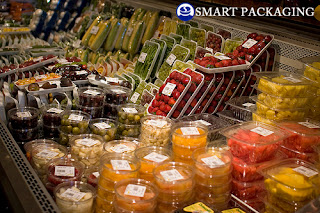
Use of plastics for food packaging applications is increasing both in quantum as well as in variety. Plastics are available in various forms such as monofilms, co-extruded films, laminates, sachets, jars, bottles, jerry cans, trays, cups and containers of all shapes and sizes. Realising the versatility of plastic packaging which has prompted its wide usage in food packaging in the country, it was considered expedient by the BIS to formulate standard on this subject – IS: 10171-1982, Guide on Suitability of Plastics for Food Packaging.

This standard is expected to provide general guidance to the food packer in selecting the specific thermoplastic material or its combination to design an acceptable food packaging system. The standard, however, does not provide guidance on the actual design of the food packaging system or cover the shelf-life requirements for various food products. The standard also states that the plastics used shall be of food grade material and should be safe for food contact and conform to the relevant Indian Standards and used in conjunction with the following series of standards on food contact plastics of which it forms a part.

Standards and Specifications of Plastic Recycling
The Indian plastic industry has helped formulate standards and specifications for plastics recycling in the country. There are two BIS standards introducing the coding system recycling practices and standards for the manufacture & usage of recycled plastics.

Recycled Plastics for Manufacturing of Products Designation IS: 14535
Scope:
1. This standard is intended to be used for the identification of the recycled plastic material on the basis of its basic properties and applications.
2. This standard applies to recycled plastics material ready for normal use without any further modifications.
 plastic containers manufacture

3. Though some modification and test methods have been provided in the standard, any specific modification and the relevant test method, which may be necessary for some specific applications, shall have to be agreed between the purchaser and the supplier.
4. Though this designation system is only indicative of a broad classification of the recycled material, the absolute value of the low results may be provided which shall be agreed to, between the purchaser and the supplier.

• Guidelines for Recycling of Plastics
This standard prescribes guidelines to the manufacturers of plastic products with regard to the marking to be used on the finished product in order to facilitate identification of the basic raw material. It will also help in identifying whether the material used on the end product is recyclate or a blend of virgin and recyclate.

Terminology:
1. End Products: Products made out of the virgin, recycled/reprocessed plastics. Typical suggested end products along with the use of appropriate types of plastic waste/scrap are given. A process by which plastic waste is collected, segregated, processed and returned for use.

2. Classification of Recycling: Plastics recycling technologies have been historically divided into four general types – primary, secondary, tertiary and quaternary

Read More about plastic products here..